
Tags
Historic Districts, NRHP, Salt Lake City, Salt Lake County, South Temple Historic District, utah
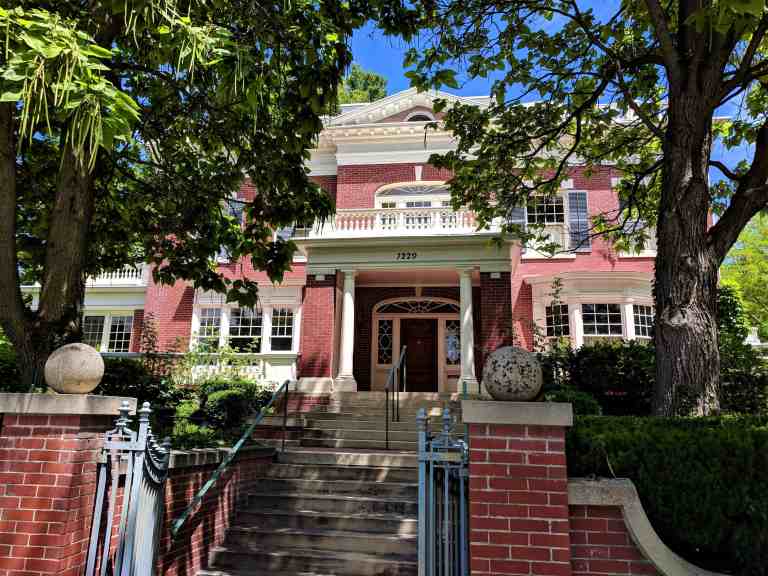
One of the historic districts in Salt Lake, The East South Temple Historic District consists of that part of South Temple Street from State Street (100 East) to Virginia Street (1350 East) containing 10 1/2 large blocks on the south and 20 small blocks on the north, The street slopes gradually from east to west, and marks the boundary between the flatter areas of the original settlement and the steeper “dry bench” of the Avenues to the north. South Temple was the first stately residential boulevard in Utah. The district consists of that part of the street which continues to display many fine old homes of both architectural and historical significance. A. variety of buildings exists in the district, including large mansions, carriage houses, churches, commercial and office buildings, a school, hospital, medical clinics, clubhouses, apartment buildings and gas stations. The density of buildings per blockscape ranges from 1 to 12 with an average of 4.7 buildings per block elevation. Natural and geographic features are not prominent in the district.
The South Temple Historic District was added to the National Historic Register (#82004147) on July 14, 1982.
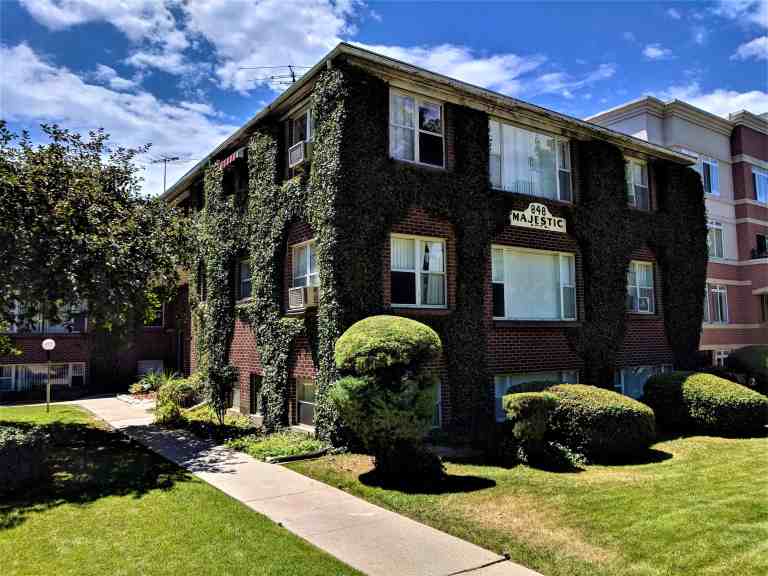
The district consists primarily of large, high-style residences built from the late 1880s through 1915. There are also a few small vernacular residences which survive, though moderately altered, as remnants of the street’s pioneer period. Larger buildings before 1930 include major religious architecture (cathedral of the Madeleine, First Presbyterian Church, Masonic Temple), as well as large, significant apartment projects (Eagle Gate, Maryland). A. number of buildings have been erected along South Temple Street since the historic period. Some of these, particularly the earlier structures, are architecturally compatible with the period buildings. Many of the most recent larger structures are inconsistent with the residential character of the street.
A large number of architectural styles are represented on South Temple. Many of the buildings are the best examples of their styles in Utah, as well as the best residential work of the architects who designed them. Examples include:
- Chatequesque: Kearns Mansion, Carl M. Neuhausen
- Victorian Romanesque: Cathedral of the Madeleine, C.M. Neuhausen
- Gothic Revival: First Presbyterian Church, Walter E. Ware
- Queen Anne: Emmanuel Kahn House
- Classical Revival: Enos Wall Mansion, Richard K.A. Kletting; Keith-Brown Mansion, Frederick A. Hale
- Shingle Style: Markland House, Frederick A.. Hale
- Renaissance Revival: Alta Club, Fred A.. Hale
- Prairie Style: Ladies Literary Club, Ware and Treganza
- Egyptian Revival: Masonic Temple, Scott and Welch
- Colonial Revival: Terry House, Henry Ives Cobb
South Temple is significant as the first stately residential boulevard in Utah and remains today, much of it still residential, as a reminder of a lifestyle that is gone. It served as the only primary east-west route in early settlement days between the city and Red Butte Canyon, and Fort Douglas (established in 1862). The buildings which line this street from Third East to Virginia Street are unique reflections of some of the people who have greatly influenced the history and development of the state of Utah. Included in this group of people are: senators, governors, mayors and other political figures; mining men, who made their fortunes in the small mining towns surrounding the Salt Lake Valley and then used their new wealth to build impressive, ostentatious mansions for their families; and immigrant merchants who became financially successful. Along the street are many fine structures of both architectural and historical significance. The excellence of design and craftsmanship, the landscaping, and the diversity of periods and styles represented, sets the street apart from any other area of Salt Lake City.
South Temple includes some of the best work by Utah’s major architects. Richard Kletting’s all-concrete Classical Revival mansion for Enos Wall is one of the largest of Kletting’s residential designs. Several of Frederick Male’s finest residences (including the Downey House, the Keith-Brown Mansion and the Markland house) and his Renaissance Revival Alta Club are on South Temple. Henry Ives Cobb, the New York architect who designed the Boston and Newhouse buildings on Exchange Place, did the Terry House, one of the most elaborate and academic Colonial-Georgian Revival houses in Utah. A number of other buildings on South Temple are among the very finest examples of their styles built in Utah and these include the Cathedral of the Madeleine, (C.M. Neuhausen) the First Presbyterian Church (Walter E. Ware), the Kearns Mansion (C.M. Neuhausen) and the Ladies Literary Club (Ware and Treganza). Two of the most architecturally significant apartment blocks are on South Temple, the Eagle Gate and the Maryland (Bernard O. Mecklenburg). The loss of significant buildings on South Temple, attributable in large part to the zoning changes of 1935 and 1959, shows the continuing prestige of South Temple addresses — even though the newer architecture does not reach the standards of the old.
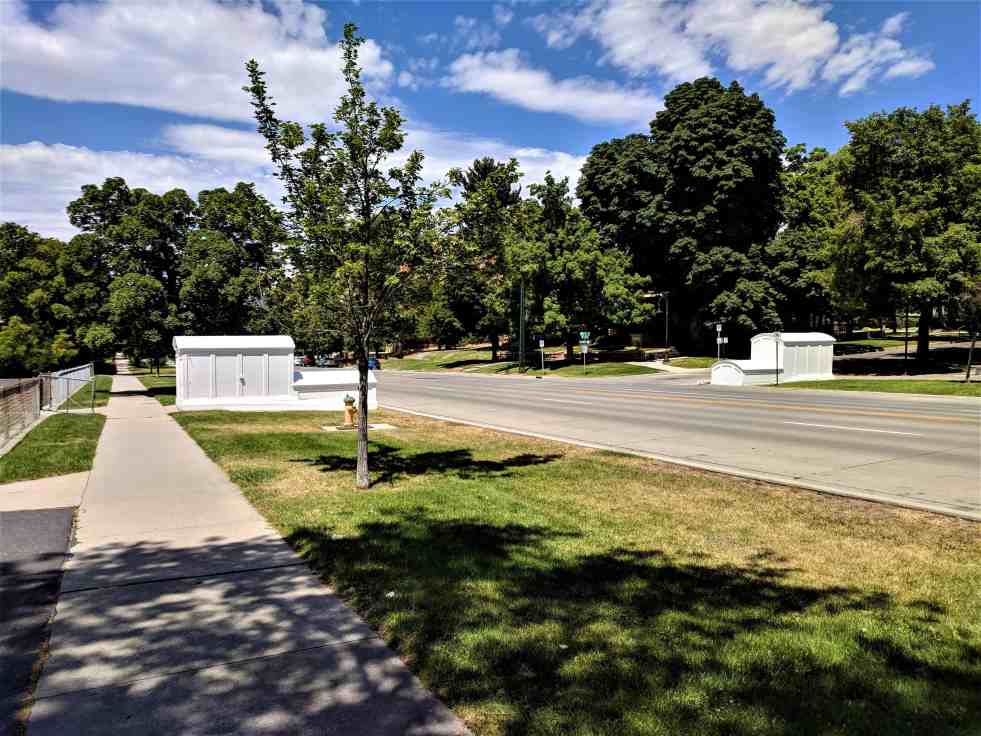
The South Temple Historic District includes a significant deviation from the original plat of the city in Haxton Place. Purchased by James T. Keith, a Salt Lake dentist, Haxton Place is reportedly modeled after London’s street of the same name and was laid out by Englishman Thomas G. Griffin. Although a simple cul-de-sac with two pairs of stone and iron pillars at the entrance, Haxton Place is distinguished by the unique variants of various Colonial Revival designs built there.
South Temple became important as the major traffic route between Fort Douglas and the city after 1862. During this period the roadbed was crooked and covered with deep, fine dust ground by wheels of military wagons and wagons going to Red Butte Canyon for building stone. Peddlers and merchants made frequent use of the street, which was also a parade route.
The full force of Victorian architecture began to express itself on South Temple in the 1870s. The Gardo House, built in 1876 and designed by Joseph Ridges and William H. Folsom for Brigham Young’s wife, Amelia Folsom, was a splendid French Second Empire monument, unfortunately razed in 1926 for the Federal Reserve Bank. Old adobe homes were gradually replaced with larger structures and lots were subdivided, reducing open spaces and eliminating orchards.
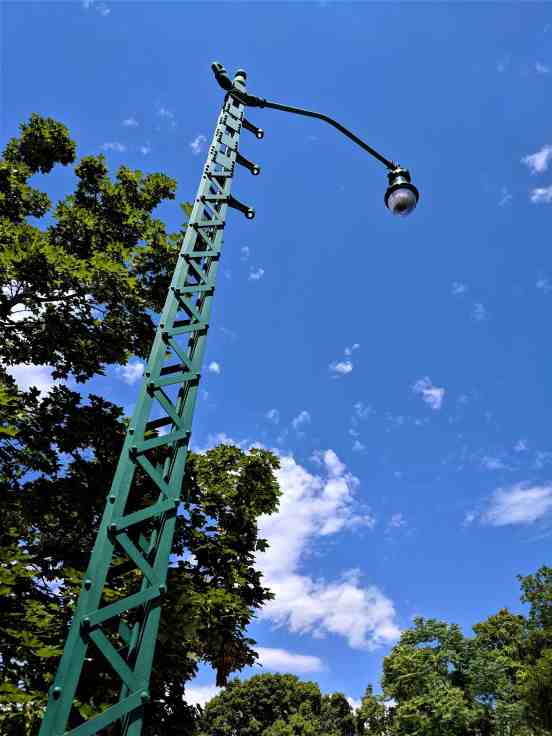
The gaslight era (the 1880s) was no more evident than on South Temple. Earlier kerosene lights were replaced by gas lights supported by fancy metal standards. Electric lights appeared by 1900. Modern water and sewer systems were also installed in the 1890s, replacing the pioneer water ditches which had served for irrigation and culinary purposes.
The period from 1889-1893 marked the Utah Building Boom. Several fine residences in the new Victorian style — Shingle Style, Chateauesque and Eastlake — were built. Perhaps the period of heaviest growth for South Temple was 1889-1901 when the nouveaux-riche mining, railroad and commercial tycoons built opulent mansions on the street. Government officials like Mayor James Glendenning also were attracted to the street. Towers, pinnacles, vast porches and balconies, carved stone decoration, stained glass windows and imported materials, styles and craftsmen characterized the period.
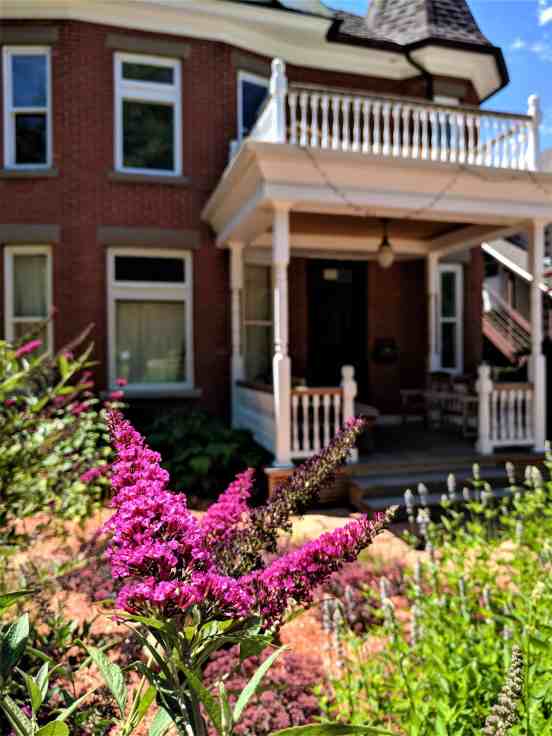
Between 1900 and 1910 South Temple’s best known residences were built in 1900-1901. These include the mansions of Thomas Kearns, Enos Wall, and David Keith. Late Victorian and Neo-Classical Revival styles dominated the architecture. The dirt street, for so many years an inconvenience, was finally paved, first with brick and later with asphalt, in the early 1900s. The old rock wall which surrounded the city and ran along part of South Temple was dismantled and the orchards totally disappeared. By this time, oxen, mule and horse teams were being replaced by gas-powered automobiles. Jitney auto buses were gone. The street had the contrasts of beauty and utility, its palatial mansions serviced by a network of metal tracks, telephone poles and a thick web of electrical wires. Old church landmarks, including the Tithing Office, were replaced by the Bishop’s Building and Deseret Gym on North Temple and Hotel Utah on South Temple. The homes of early church leaders were replaced by turn-of-the-century apartments and club buildings: Eagle Gate Apartments, Covey and Buckingham Apartments, B.P.O.E. (Elks) Club, the Alta Club and the University Club. The change in land use spread to the east where older homes were replaced by the Romanesque Catholic Cathedral and the Gothic Presbyterian church.
Pingback: Thomas Kearns Mansion and Carriage House | JacobBarlow.com
Pingback: The Covey & Buckingham Apartment Buildings | JacobBarlow.com