
Tags
historic, Historic Markers, Kilns, NRHP, Richfield, Sevier County, SUP, utah
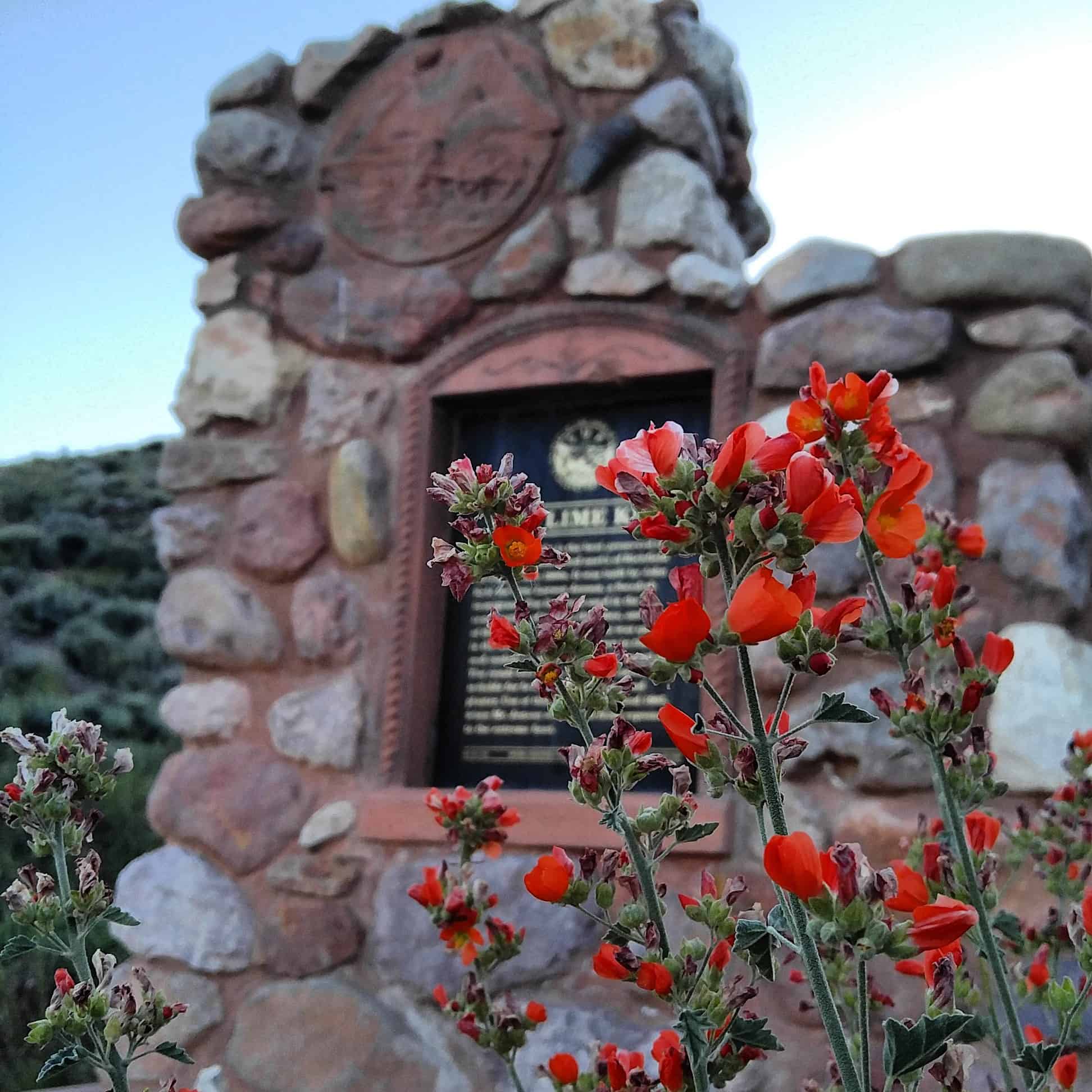
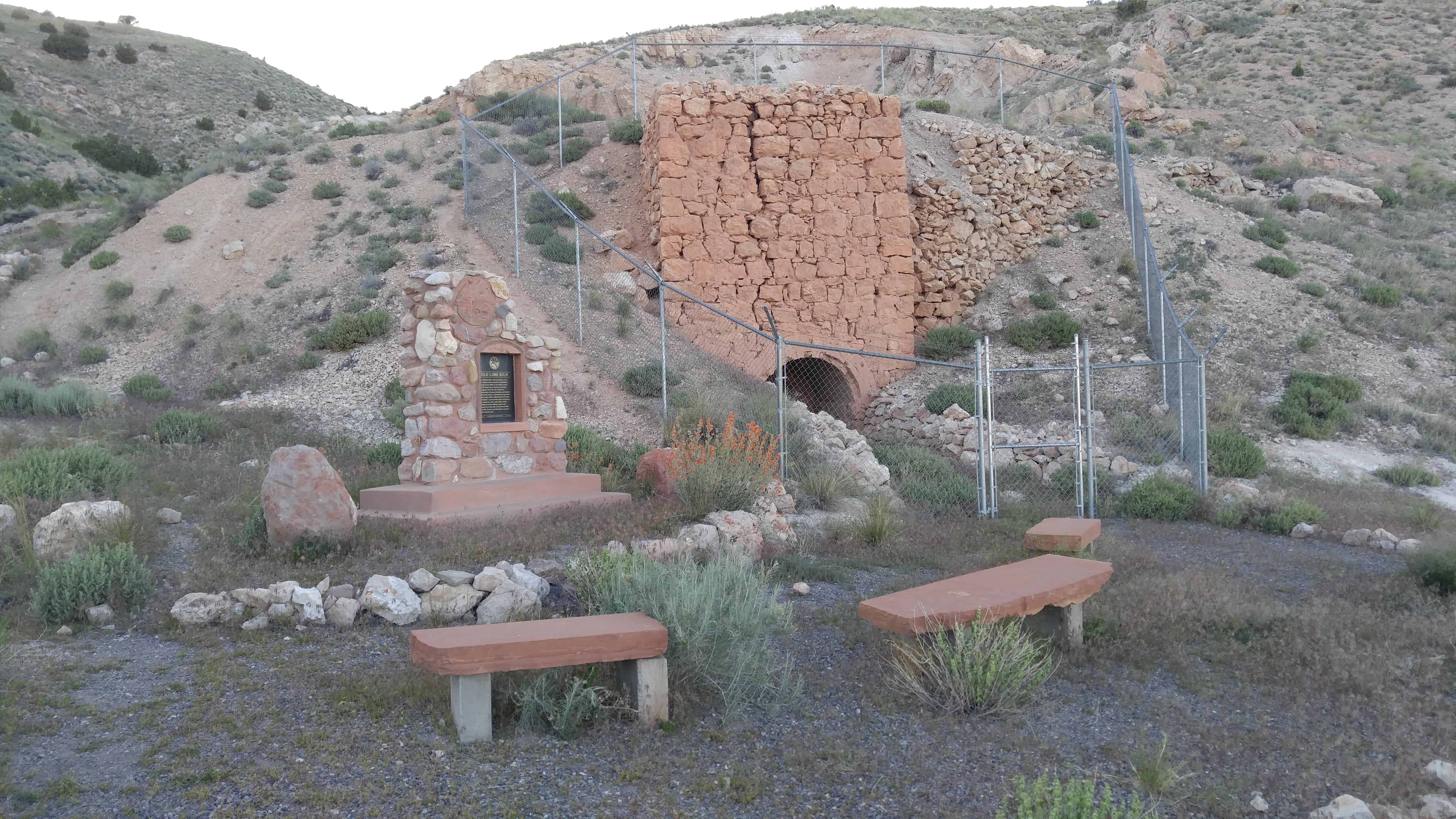
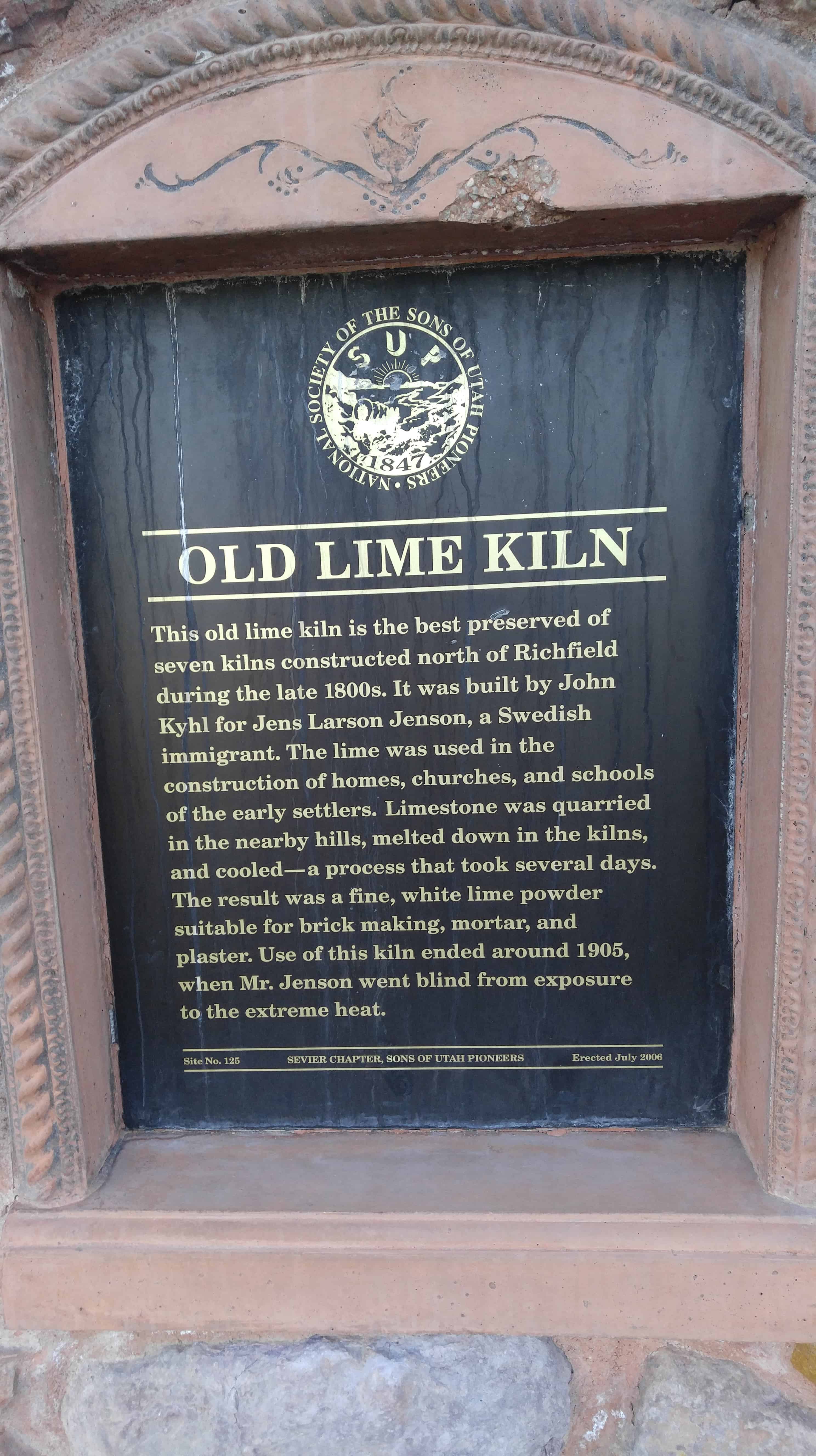
This old lime kiln, now restored, is the best preserved of seven kilns constructed here during the late 1880’s. It was built by John Kyhl for Jens Larsen Jenson, a Swedish immigrant. The vital lime was used in the construction of homes, churches and schools of the early settlers. Limestone was quarried in the nearby hills, malted down in the kilns and cooled – a process that took several days. The result was a fine, white powder suitable for brick-making, mortar and plaster. Use of this kiln ended around 1905 when Mr. Jensen went blind from exposure to the extreme heat.

This is Sons of Utah Pioneers marker #125, located in Richfield, Utah (Just north of 1-15 at Main Street)
The Jens Larson Jenson Lime Kiln was added to the National Historic Register (#78002693) on December 22, 1978.
Related:

The Jens Larson Jenson Lime Kiln represents a remaining structure important in the development of communities in the Sevier Valley. Built by Jens L. Jenson, Richfield’s “well-known” lime burner, the kiln cured lime which was used for mortar utilized in the construction of numerous rock and brick structures, as well as in the production of the whitewash used on structures basic to successful rural life.
Work was eventually ended at the kiln (n.d.) but its presence against the hillside, overlooking the valley it helped to develop, forms a link between past and present. The valley development now poses a potential threat to the structure with proposed housing units, etc., expected to be built near its site. Its preservation is met with particular interest by the Sevier Valley Chapter of the Utah State Historical Society, who harbors plans for its restoration.

Jens Larson “Limeburner” Jenson (sometimes spelled Jensen) was born in Dalby, Scona, Sweden, July 14, 1827. He was baptized into the Church of Jesus Christ of Latter-day Saints in 1855, and arrived in Utah in 1859 as a member of the Rowley Handcart Company. Jenson lived the doctrine of plural marriage, being joined to three women; and later served a sixty-two day sentence for polygamy.
In the late 1880’s Jens L. Larson returned to Richfield to settle, where he fostered his trade as a lime burner. His first kilns were small structures built in a wash near the town. According to a 1903 newspaper article, Jenson was planning to build “a more convenient commodious and rapid working plant,” allowing for the continuous burning of lime.
J. H. Kyhl, a local mason, submitted the plans to Jenson and the kiln was completed in the spring of 1903. As mentioned in the description the kiln measured twenty feet in height and twenty in diameter, with eight foot thick walls to withstand the pressure of limestone.
Workers quarried limestone in the nearby hills north and west of Richfield. The stone was dumped into the top of the kiln. A fire was then built under the grate to burn or “cure” the rocks, and left burning for three to five complete days. A three-day cooling period followed, after which time the lime was hauled in wagons to communities where it sold for a reportedly one dollar per three bushels.
Jens L. Jenson eventually lost his eyesight due to the intense heat in the Limeburning process. He died January 3, 1907, but work was carried on by his sons and family until 1910, when the kiln was sold to Leonard Ogden. Ogden burned lime for many Sevier Valley structures, including the Richfield First Ward Chapel, and the Elsinore Sugar Factory at Austin.







Pingback: First Sevier County Jail | JacobBarlow.com
Pingback: Richfield, Utah | JacobBarlow.com
Pingback: Richfield by Address | JacobBarlow.com