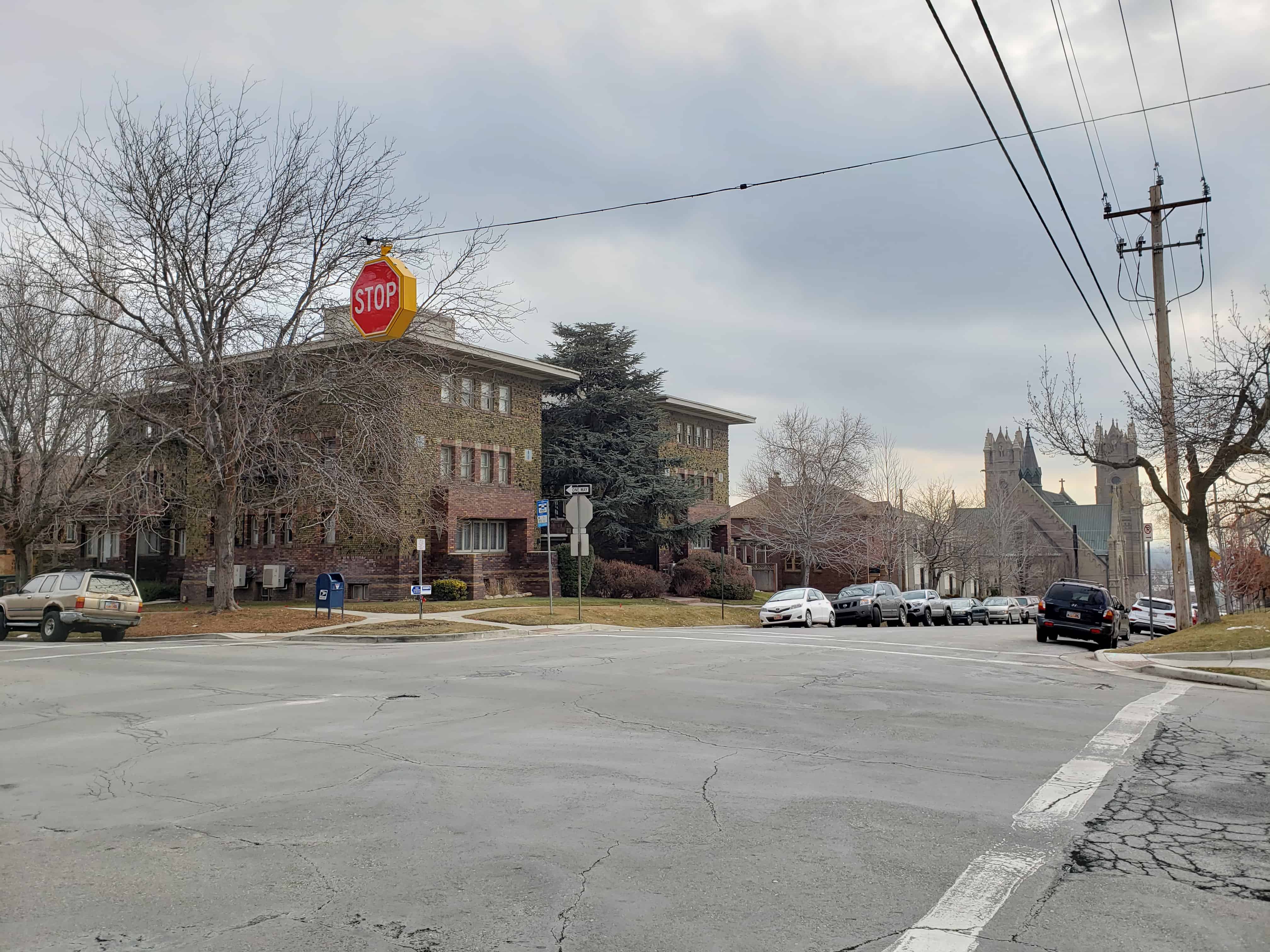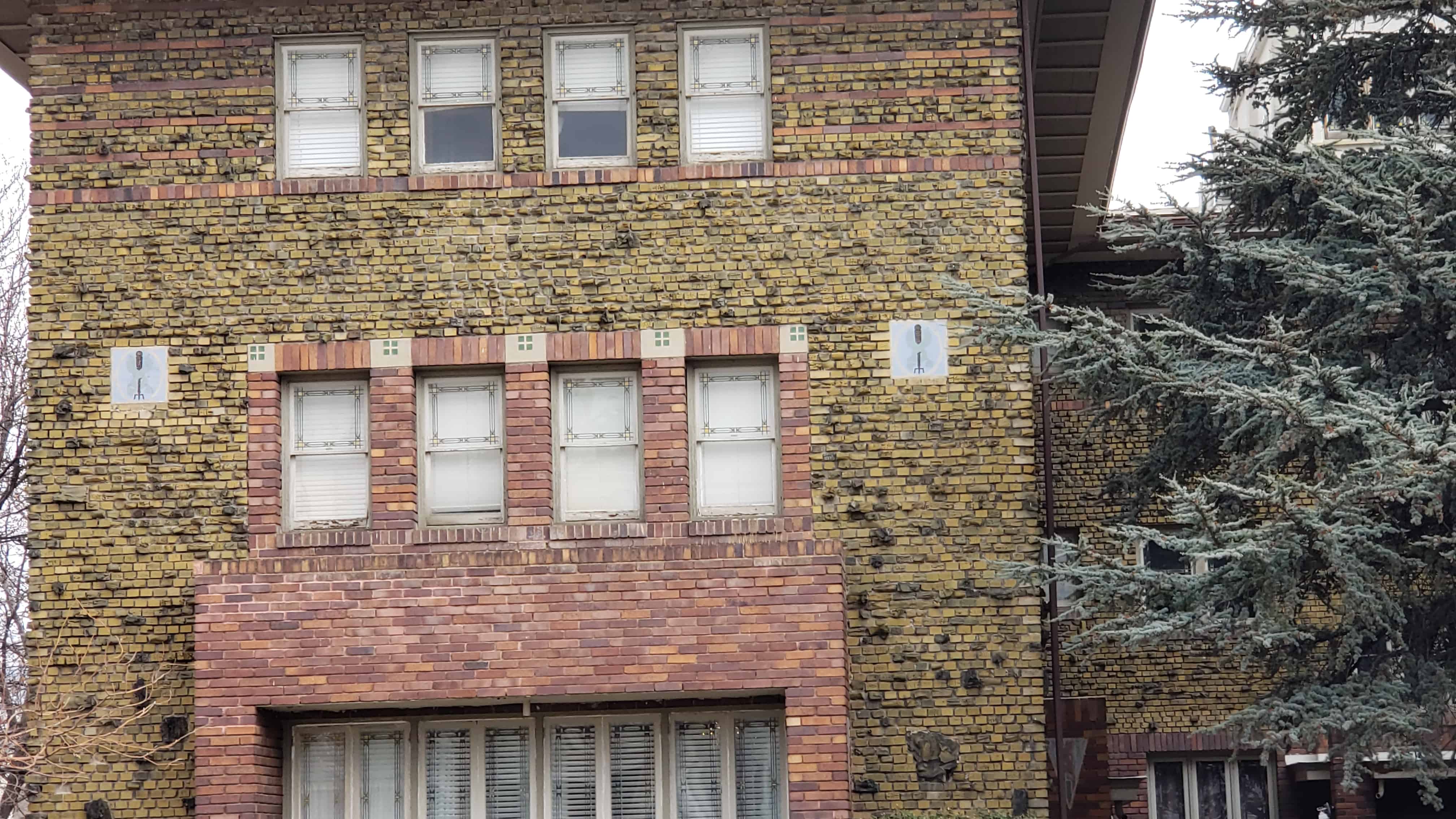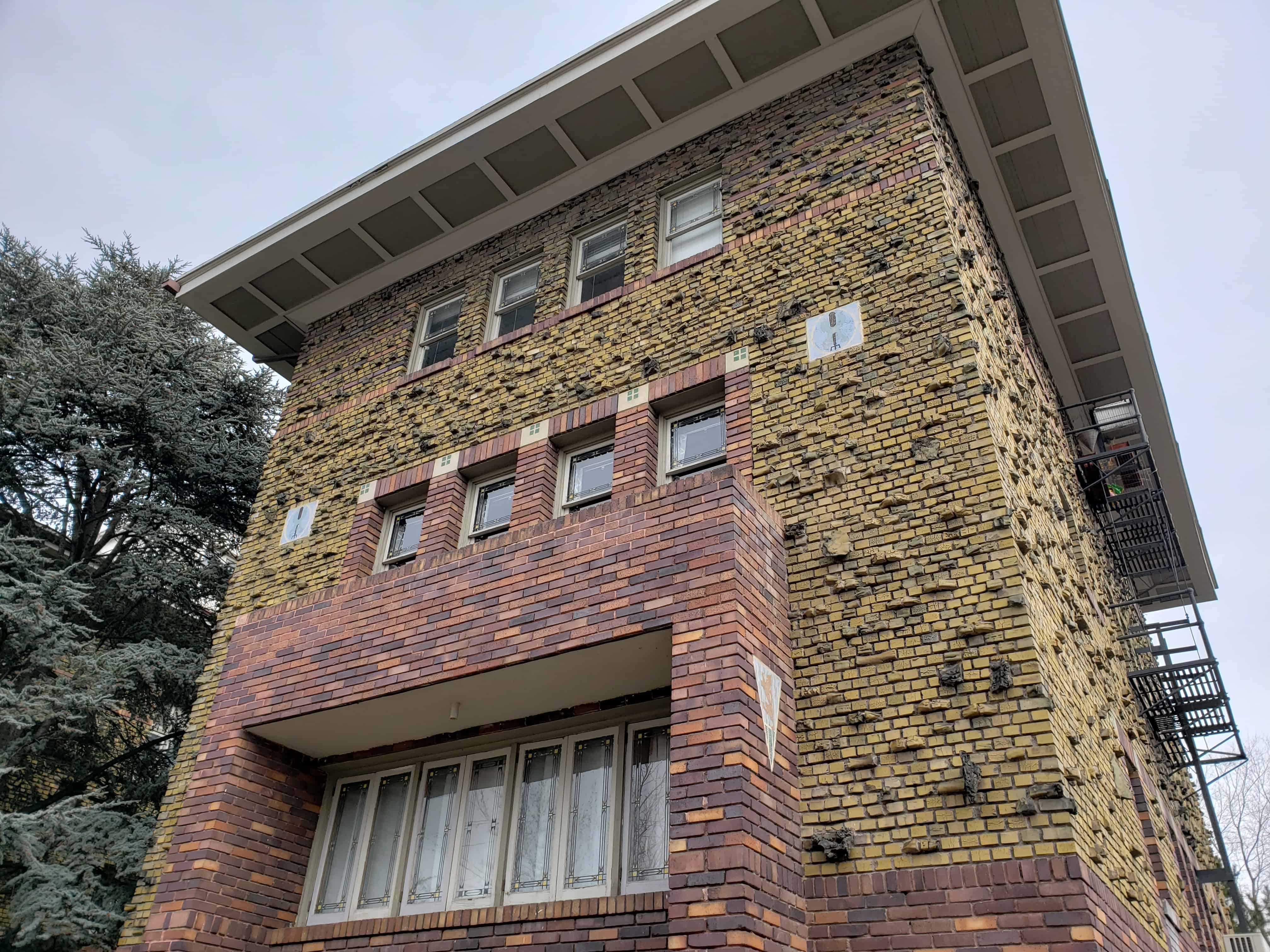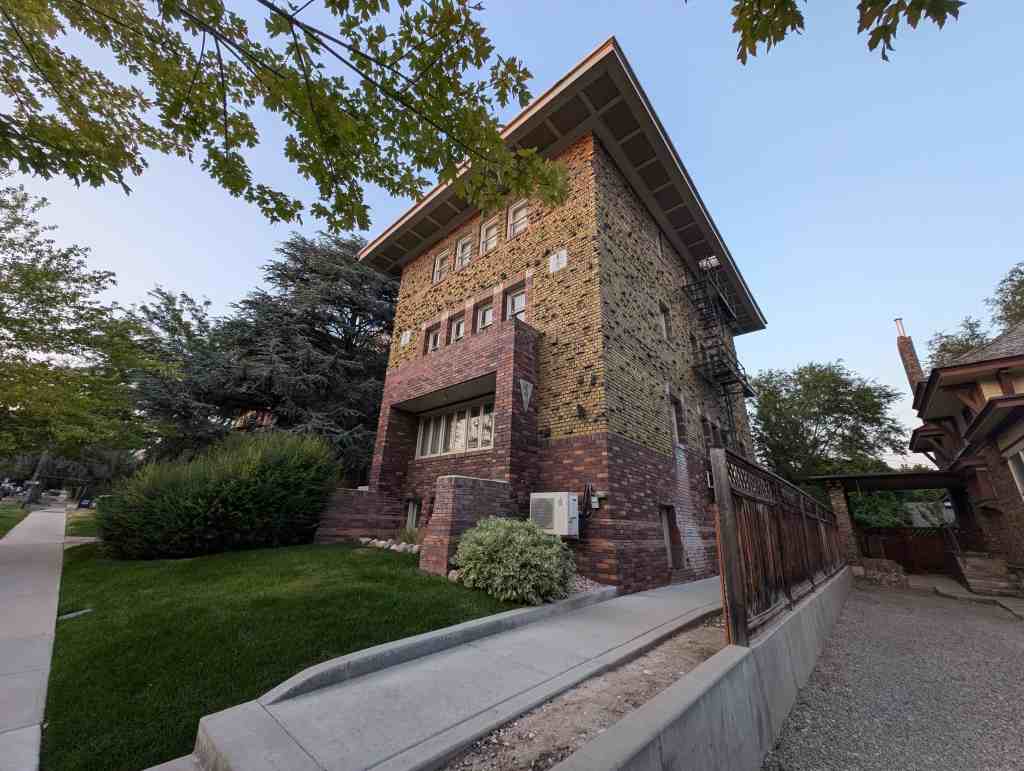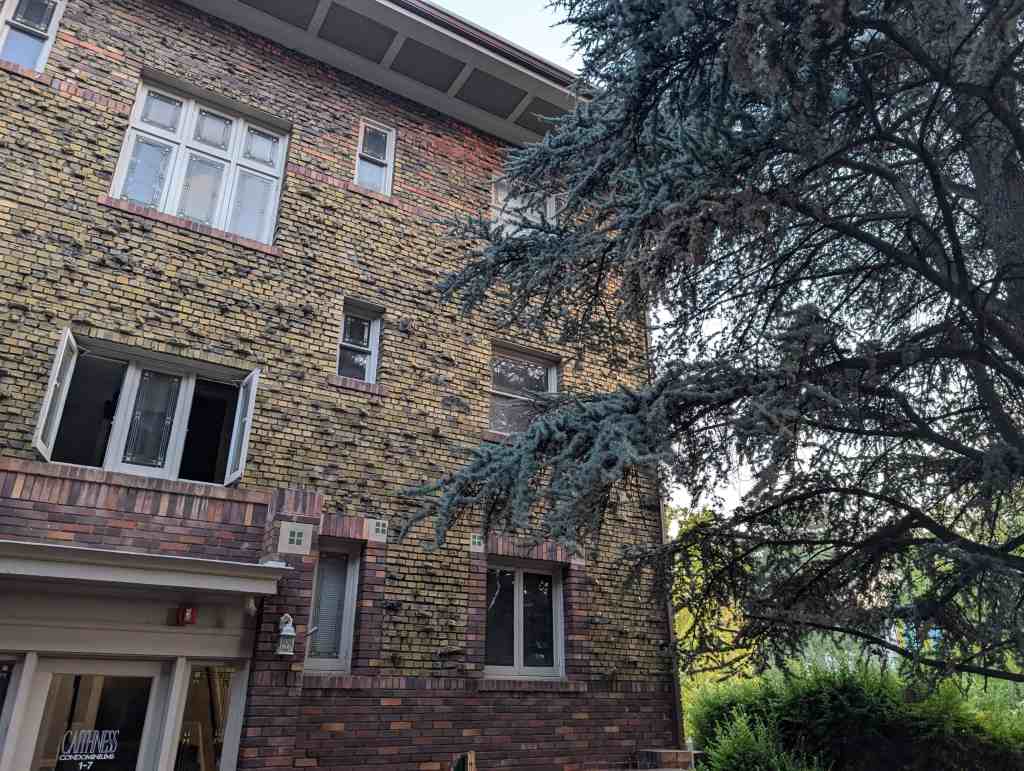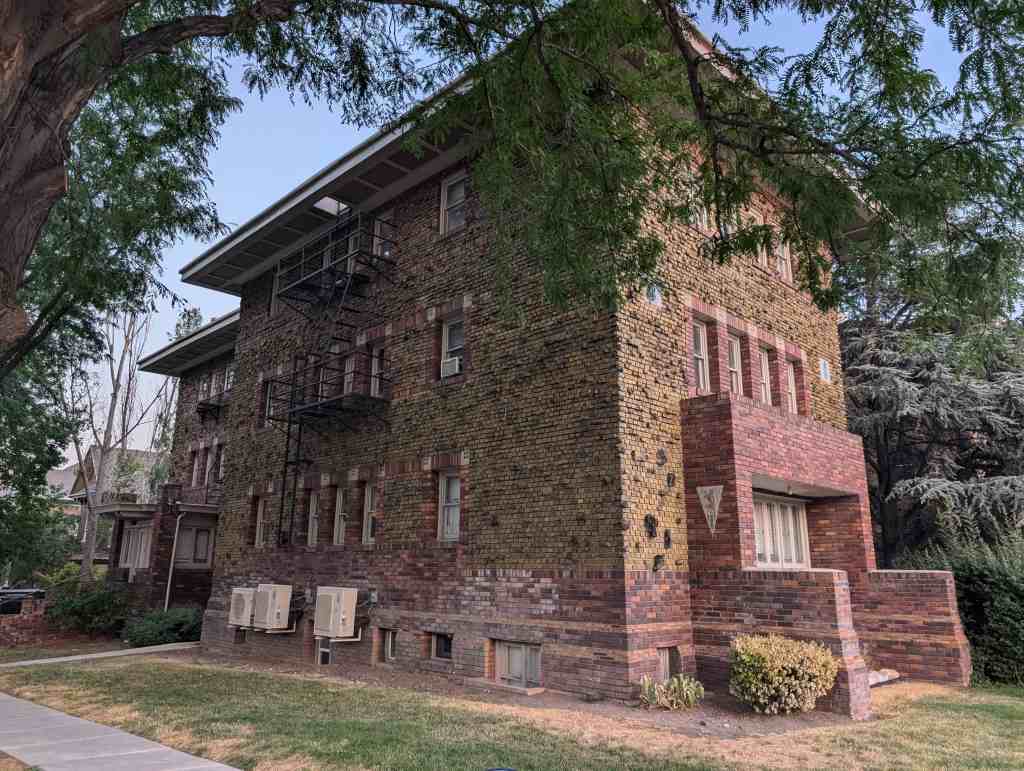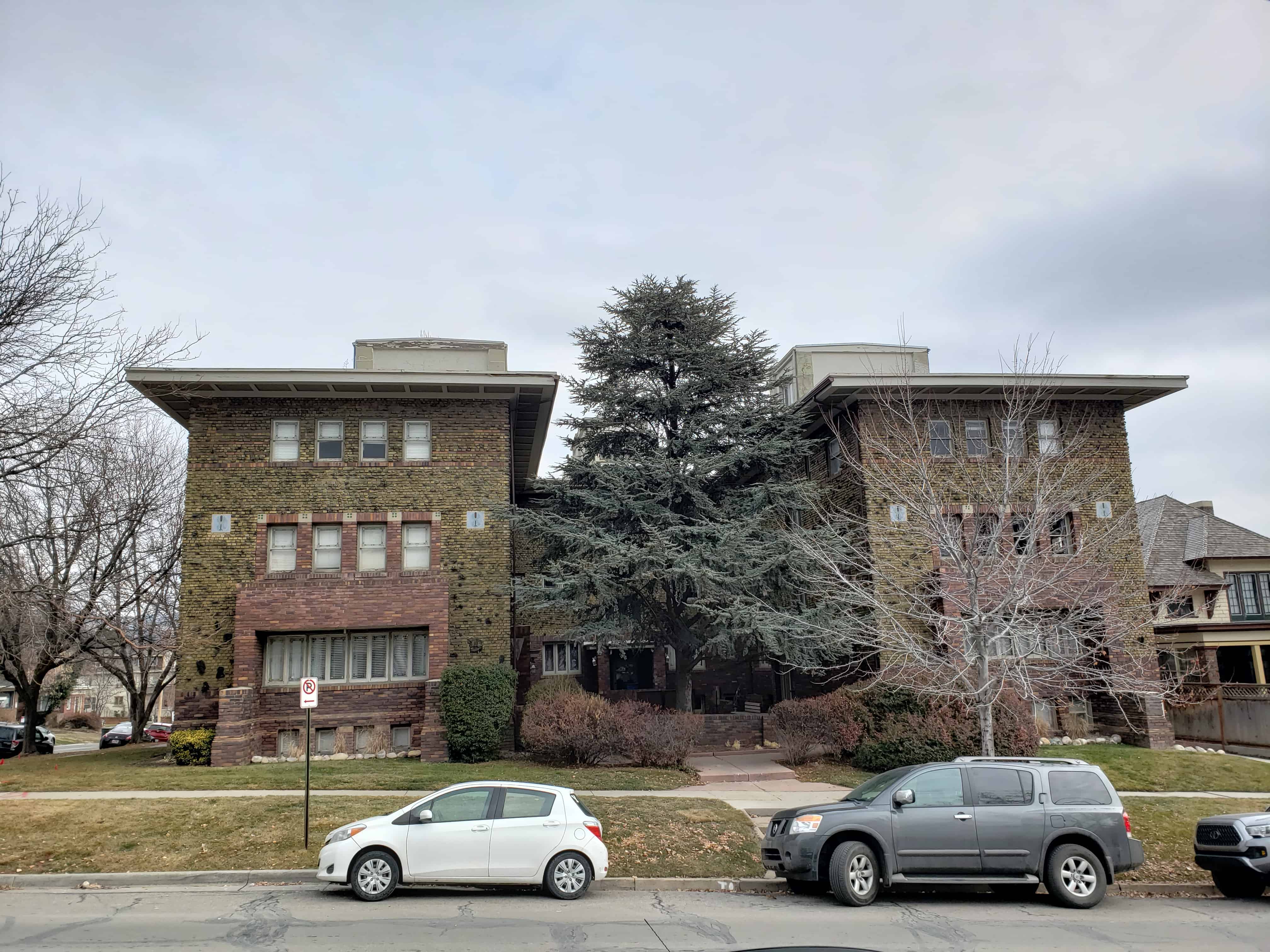

The Caithness (Riter) Apartments (now the Caithness Condominiums) were built in 1908 and are some of the many interesting apartments in Salt Lake City from that time frame.
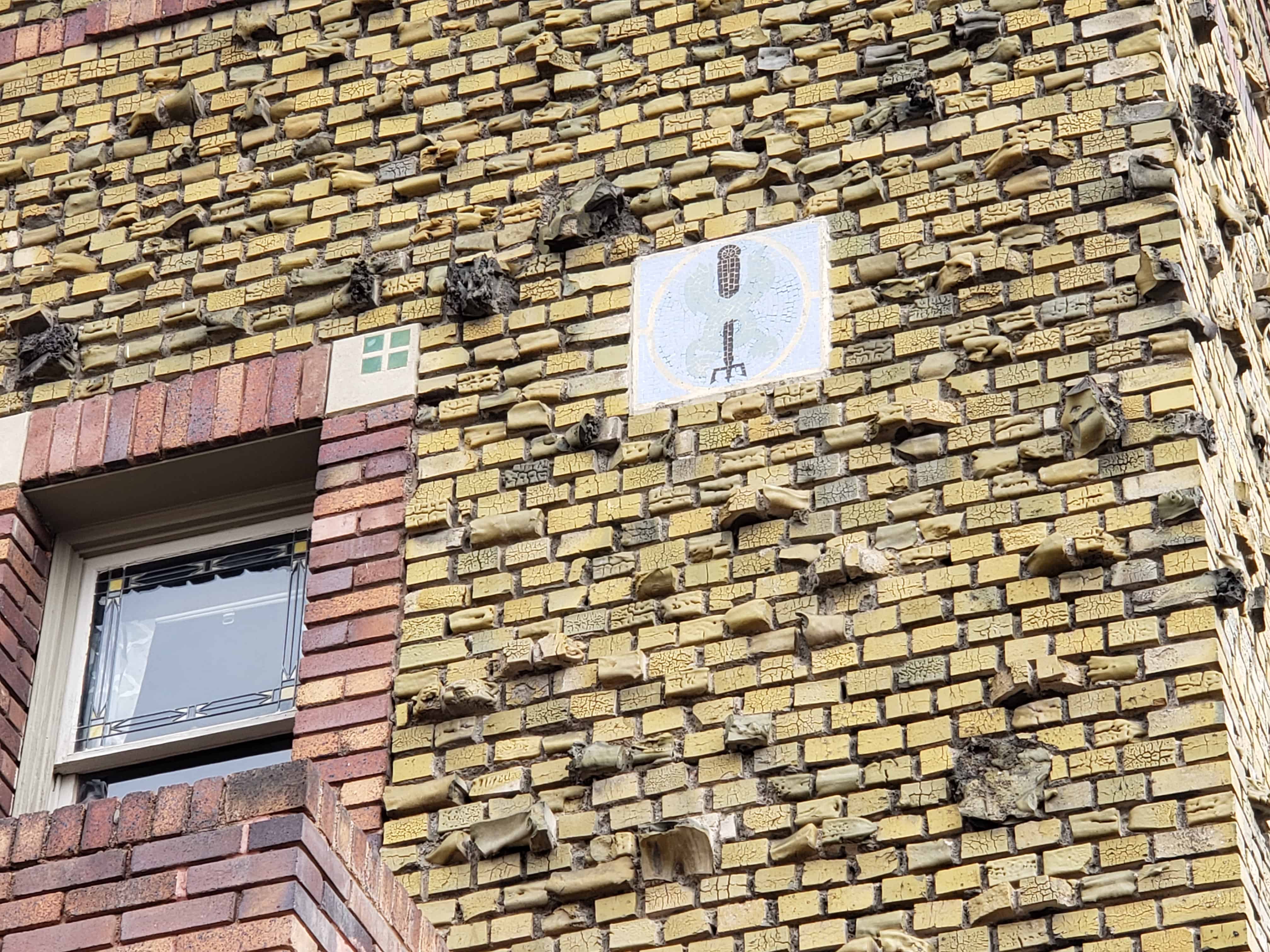
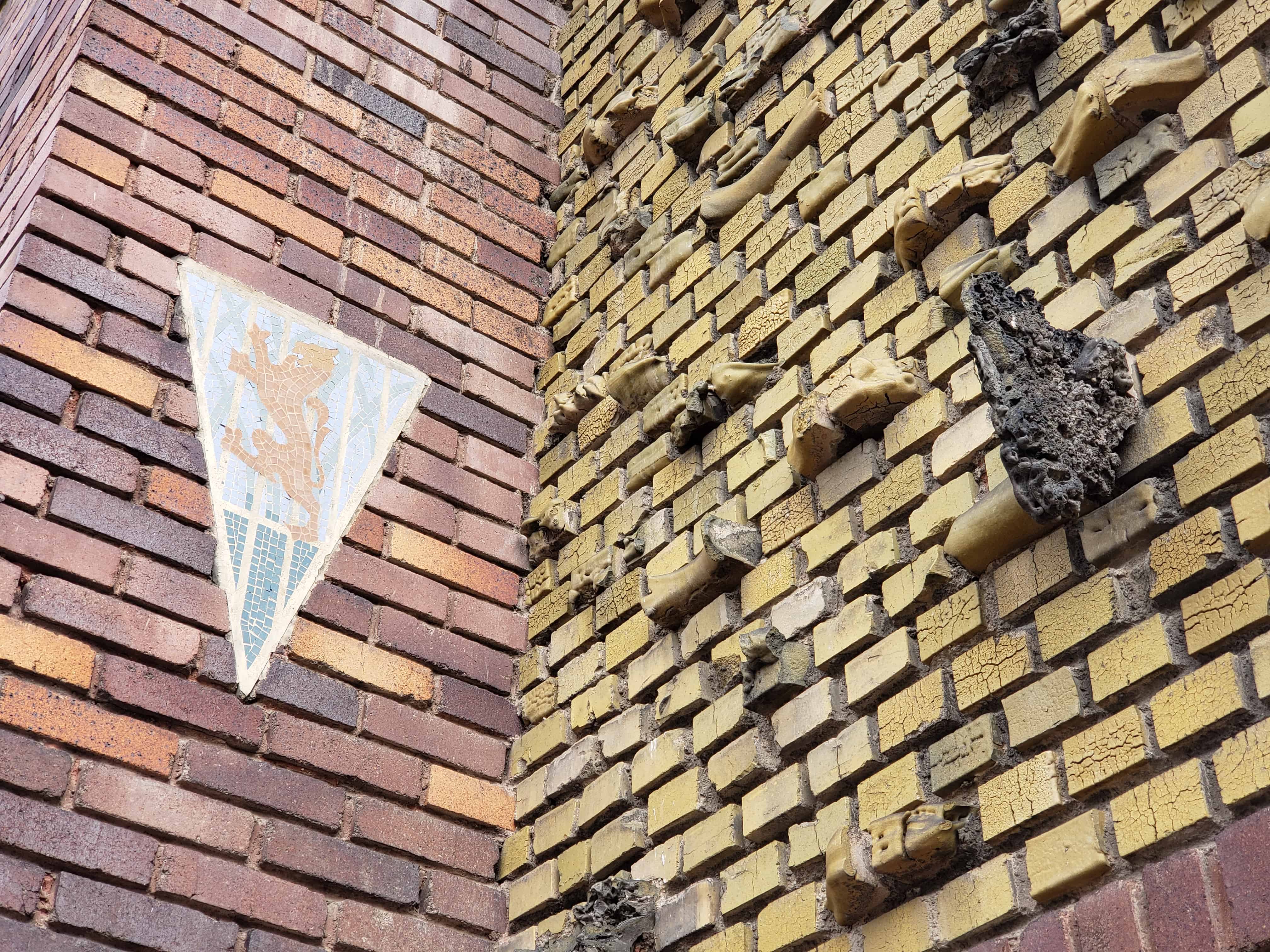
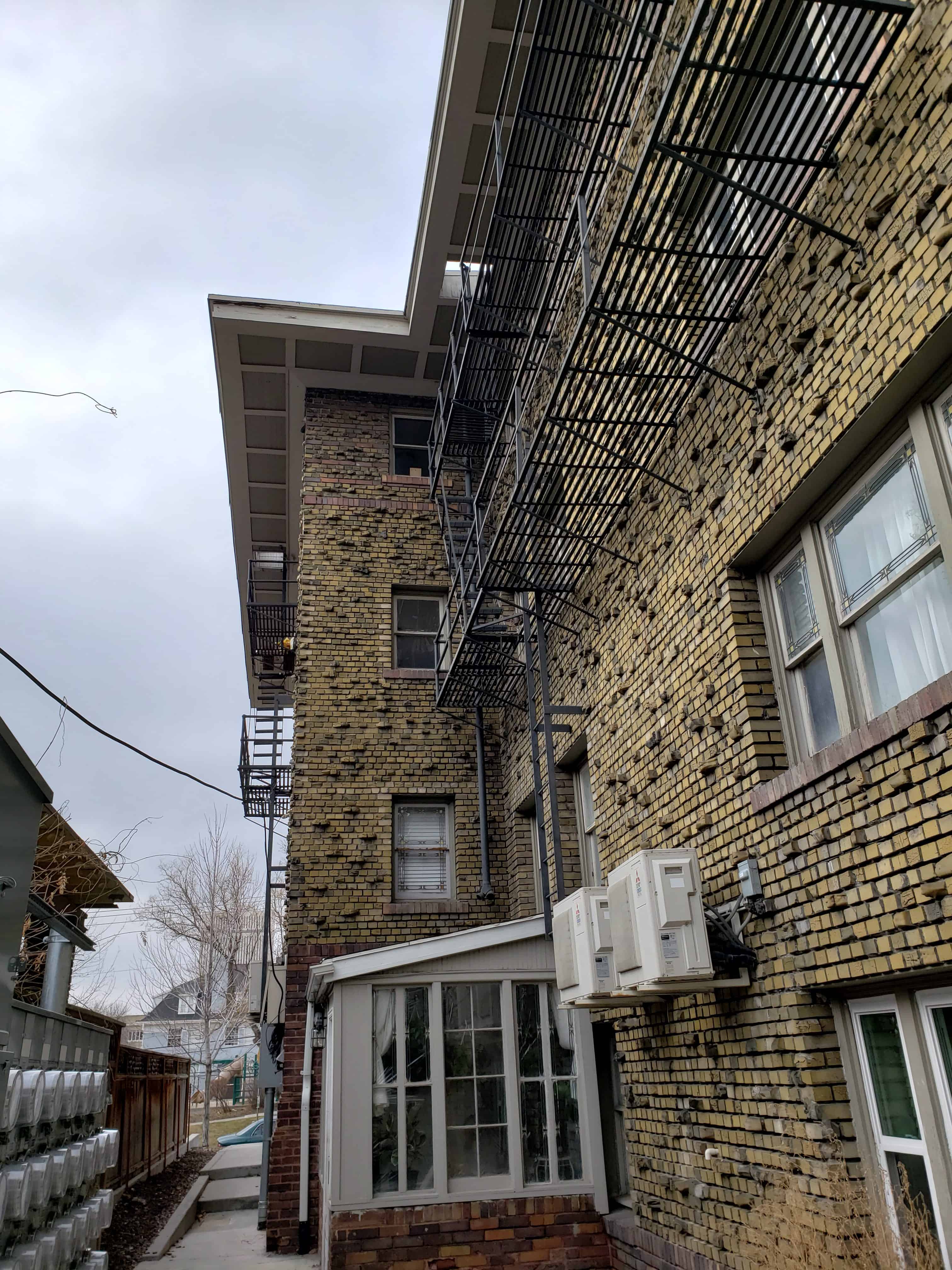
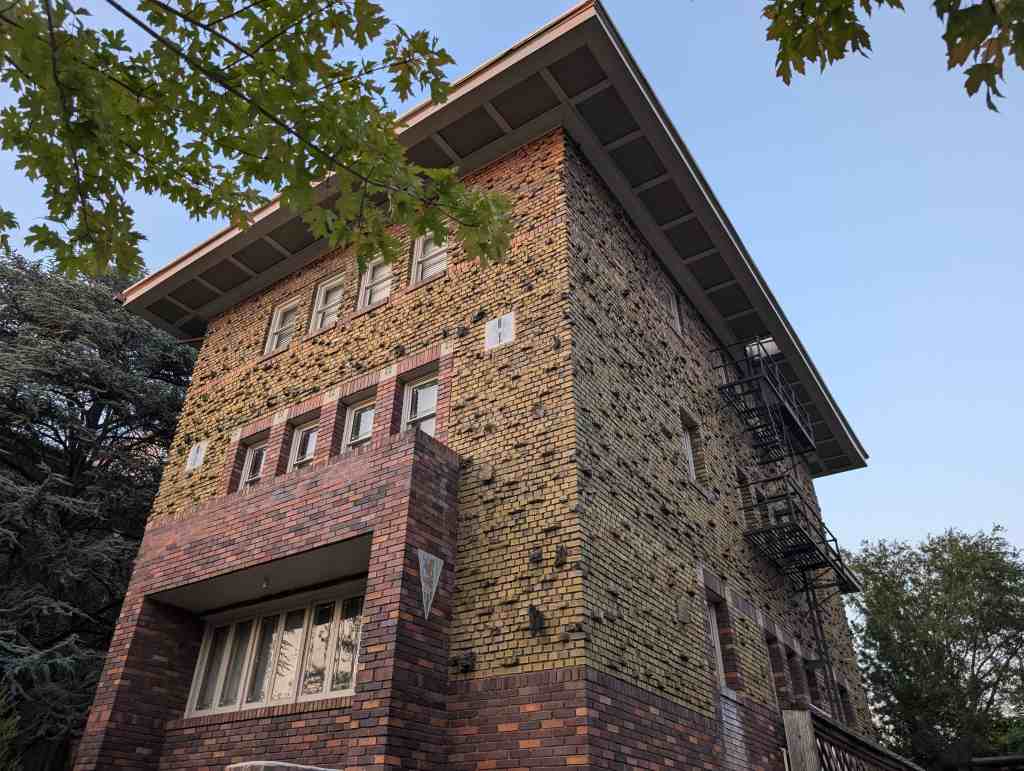
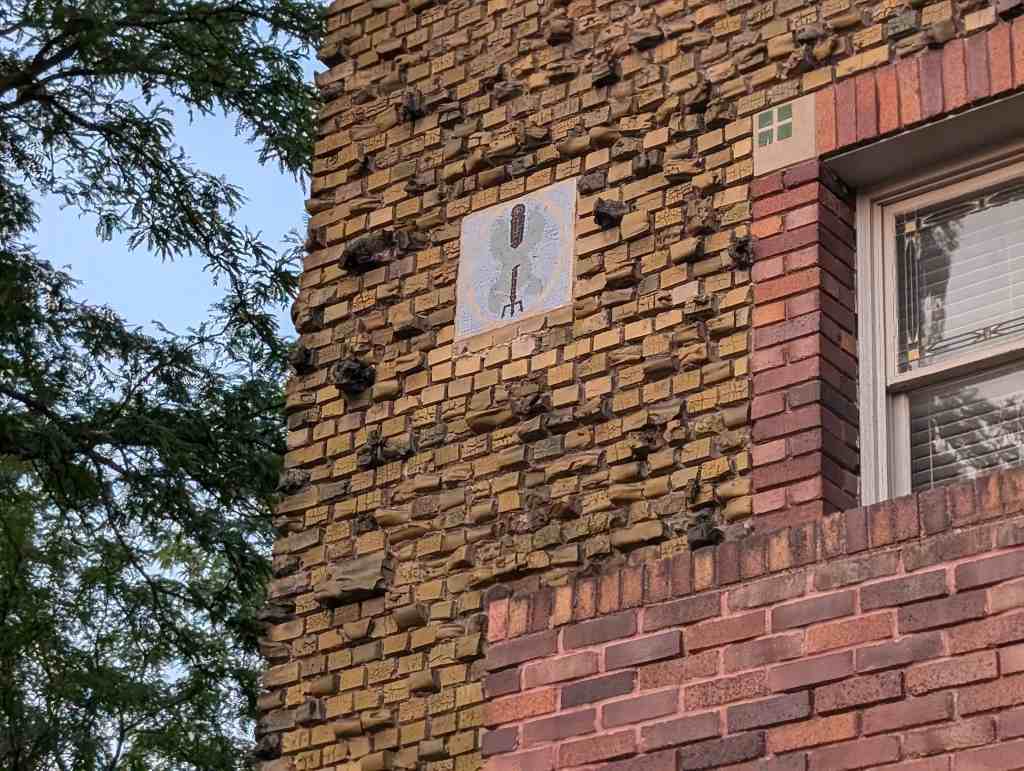
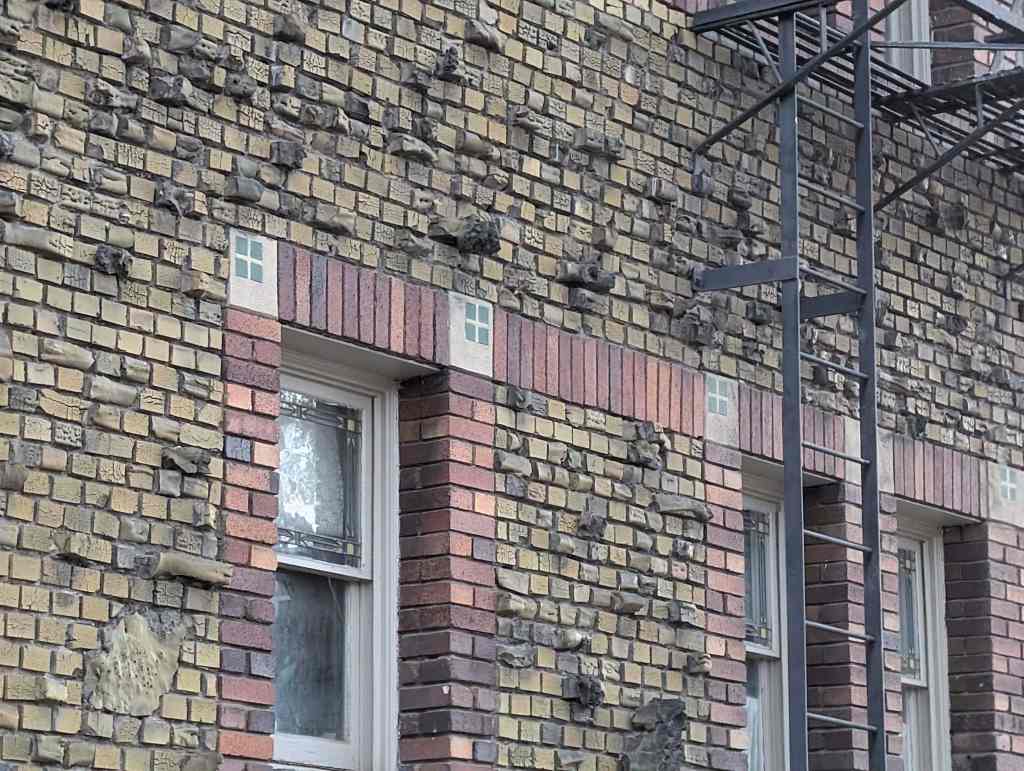
There are many interesting rocks protruding from the brick faces of the building, a resident told me that when they refaced the building and added those they had a problem with people rock climbing on the building.
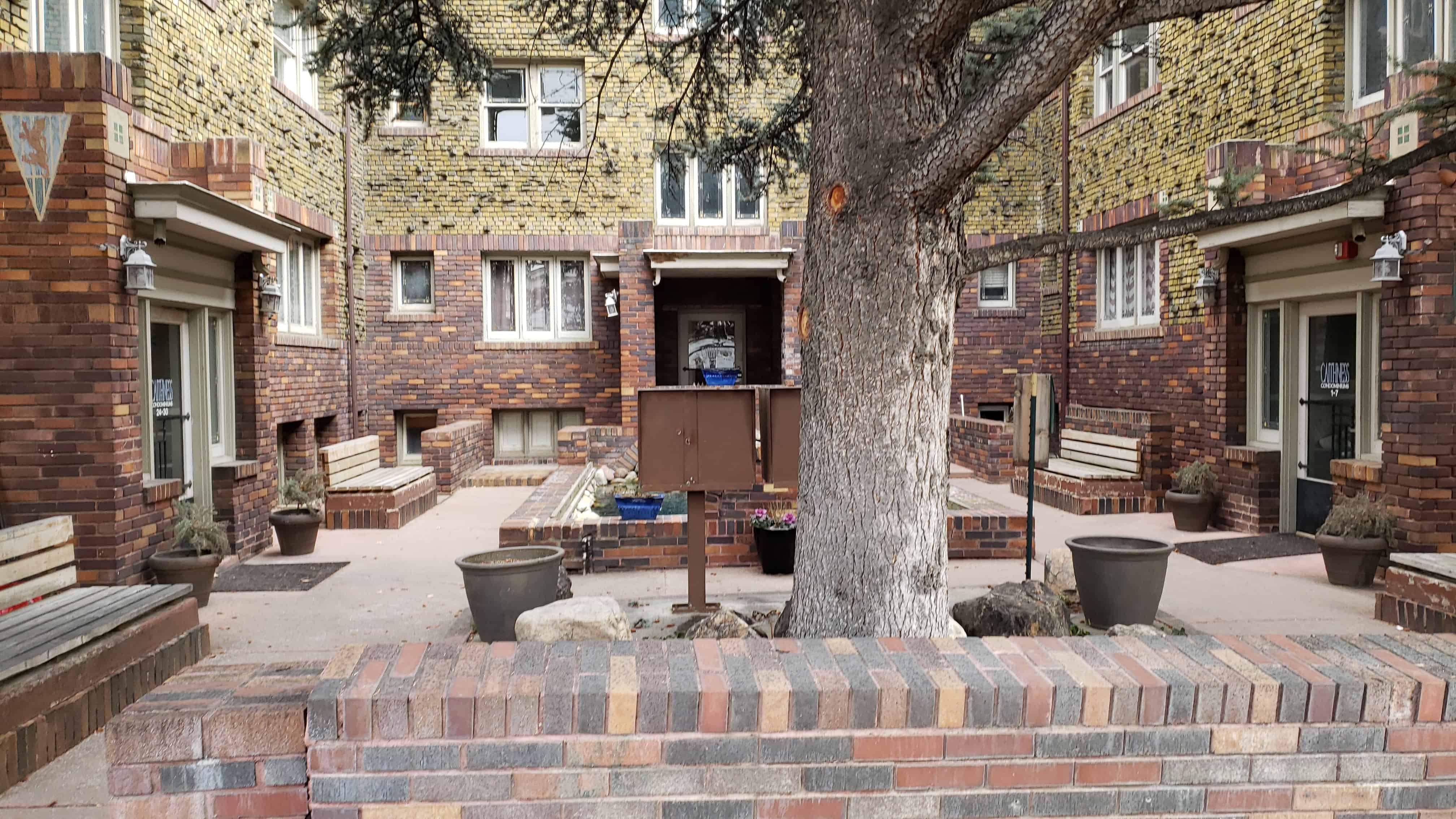
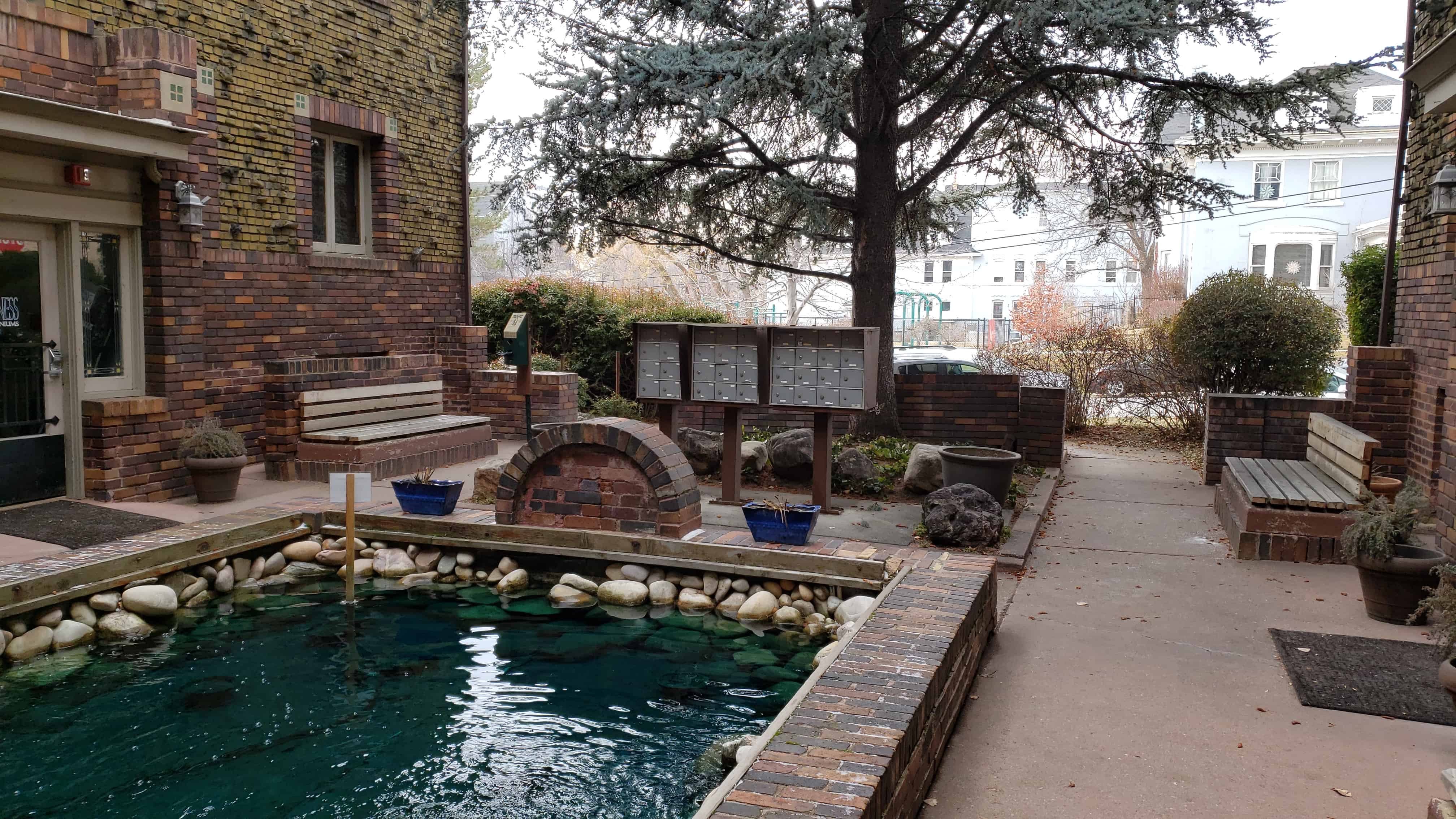
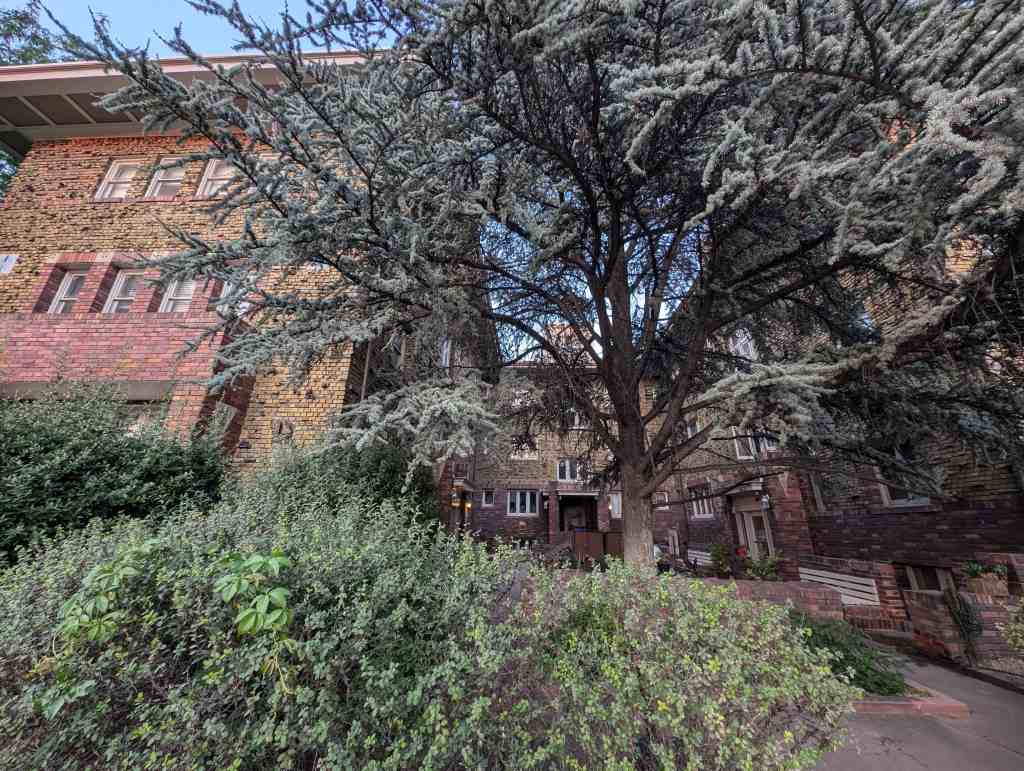
The Caithness Apartments is one of only two apartment buildings in Salt Lake City known to have been designed by Ware and Treganza, one of the most prolific and prominent architectural firms in Utah during the early twentieth century. They designed many other residential buildings – – primarily houses, but also a few smaller multi-family dwellings. The other Ware and Treganza designed apartment is the Smith Apartments located at 228 S 300 E. Both the Caithness and the Smith are walk-up U-court type apartments, though the central court of the Smith is much narrower than that of the Caithness.
Located at 86 North B Street in The Avenues in Salt Lake City, Utah
Related Posts:
- Historic Apartments in Salt Lake
- Historic Apartments PDF
- Marriot Digital Library
- Avenues Historic District Form
- Salt Lake City, Utah
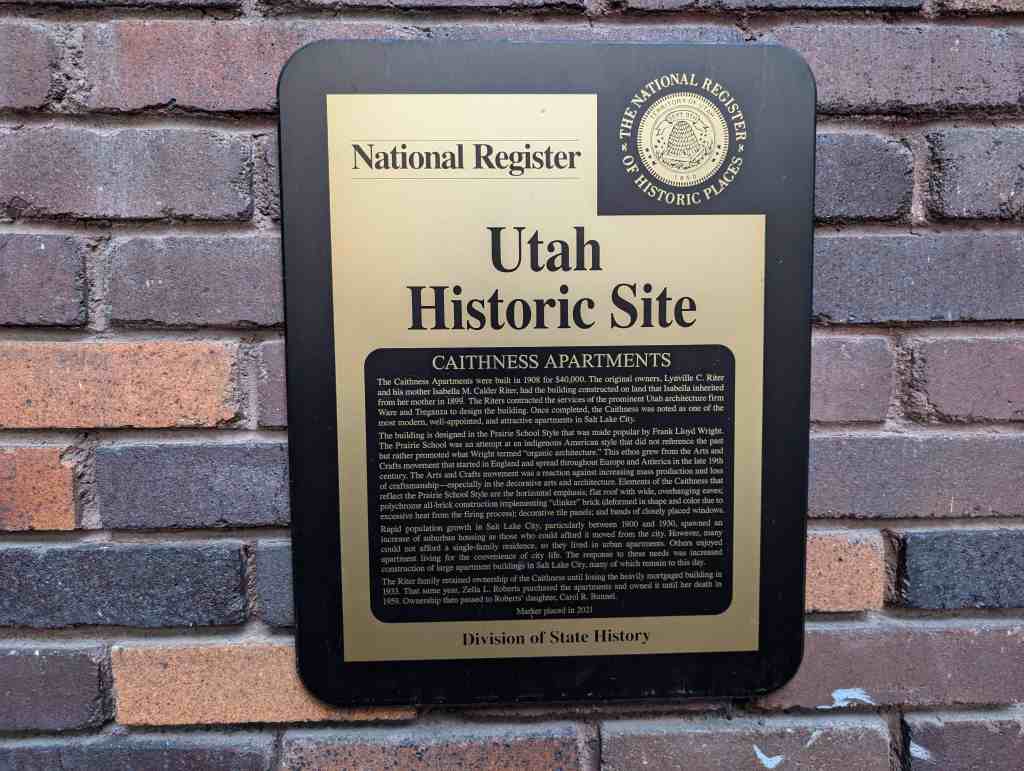
The Caithness Apartments were built in 1908 for $40,000. The original owners, Lynville C. Riter and his mother Isabella M. Calder Riter, had the building constructed on land that Isabella inherited from her mother in 1899. The Riters contracted the services of the prominent Utah architecture firm Ware and Treganza to design the building. Once completed, the Caithness was noted as one of the most modern, well-appointed, and attractive apartments in Salt Lake City.
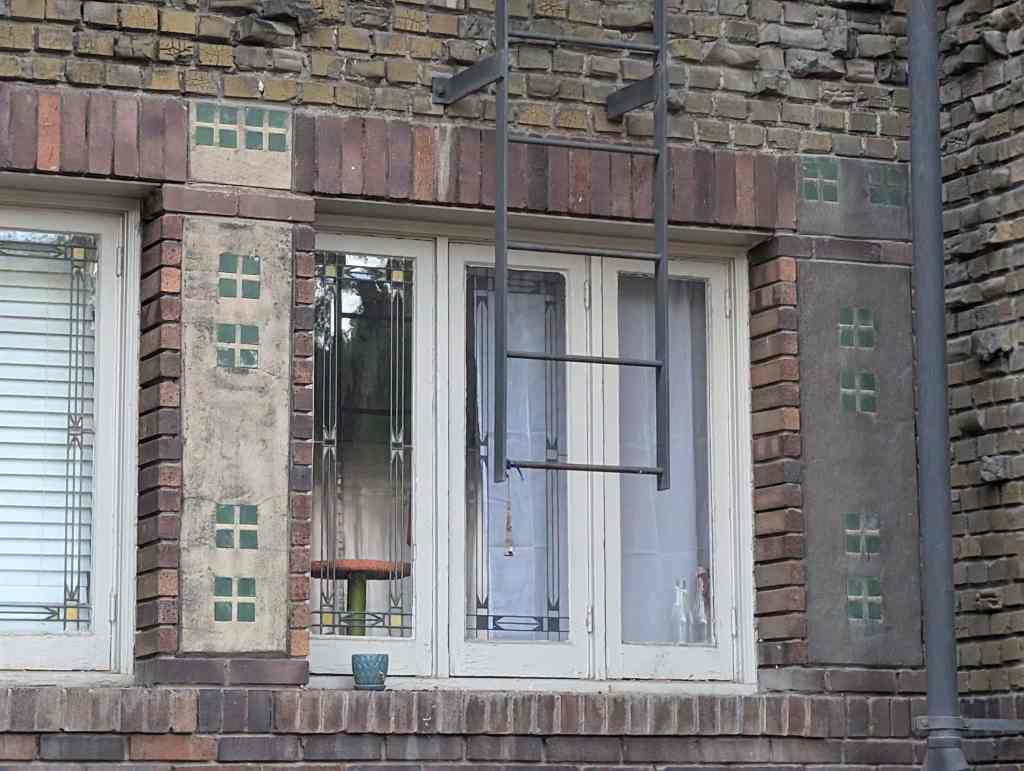
The building is designed in the Prairie School Style that was made popular by Frank Lloyd Wright. The Prairie School was an attempt at an indigenous American style that did not reference the past but rather promoted what Wright termed “organic architecture.” This ethos grew from the Arts and Crafts movement that started in England and spread throughout Europe and America in the late 19th century. The Arts and Crafts movement was a reaction against increasing mass production and loss of craftsmanship-especially in the decorative arts and architecture. Elements of the Caithness that reflect the Prairie School Style are the horizontal emphasis; flat roof with wide, overhanging eaves; polychrome all-brick construction implementing “clinker” brick (deformed in shape and color due to excessive heat from the firing process); decorative tile panels; and bands of closely placed windows.
Rapid population growth in Salt Lake City, particularly between 1900 and 1930, spawned an increase of suburban housing as those who could afford it moved from the city. However, many could not afford a single-family residence, so they lived in urban apartments. Others enjoyed apartment living for the convenience of city life. The response to these needs was increased construction of large apartment buildings in Salt Lake City, many of which remain to this day.
The Riter family retained ownership of the Caithness until losing the heavily mortgaged building in 1933. That same year, Zella L. Roberts purchased the apartments and owned it until her death in 1959. Ownership then passed to Roberts’ daughter, Carol R. Bunnel.