
Tags
Cove Fort, Forts, Historic Buildings, Millard County, NRHP, utah

The Indians called the site Pa-Hump-Pa (Cove Creek); Mormon emigrants named it Cove Creek. Cove Fort is located at a crossroads of early western trails. Jed Smith reached the site enroute to California in 1826; the old Spanish Trail also passed it. Both California-bound emigrants and Mormons passed by and camped on Cove Creek. However, not until i860 did Charles Willden and his son Elliot establish the first permanent residence there, known as Will den’s Fort.
Because of Indian hostilities in the Black Hawk War, and because Mormons needed protection for their newly completed telegraph lines to southern Utah, Brigham Young purchased the site for the church and called Ira N. Hinckley from Coalvi1le, Utah, to settle there and construct a fort. Hinckley moved his family and immediately began to raise the fort in the spring of 1867, which was completed by November of that year.
Cove Fort continued to be used by travelers and freighters through the region. Brigham Young stopped at the fort frequently on one occasion (1872) accompanied by Col. Thomas L. Kane who had helped mediate the Mormon conflict in 1858.
Ira Hinckley removed from Cove Fort after ten years, but the Mormon Church retained ownership until the Twentieth Century. During this period stages stopped regularly and freighters camped overnight nearby. W. H. Kesler leased the fort and property in December 1903. By April 1904 he had moved his family into the fort, and later (1911) purchased it. The Kesler family still owns the property.
At the time Mr. Kesler moved in, the fort was abandoned. The north quarter had been completely burned out but was restored in 1917. Since that time Cove Fort has served as a private residence, as a motel, and currently as a historic site and museum operated by the Kesler family.
It remains an excellent example of an unusually well-constructed Mormon fortification.
The text on this page is from the nomination form for the national historic register, Cove Fort was added to the National Historic Register (#70000623) on October 6, 1970.
Related:
Cove Fort was built of black volcanic rock laid in with lime mortar, burned nearby. Ira N. Hinckley directed the work and was assisted by Hans Hansen, Horace Owens, James Owens, Albert Shales, Nathan Baldwin, Christian Hansen, Alien Russell, and Dorus and Orange Warner. The estimated construction cost was about $23,000.
The fort consisted of a square – – four walls 18′ high from the base of the foundation, 4′ thick at the foundation, and 2′ thick at the top, and 100′ long. The main gateway in the east wall was approximately 14′ square and closed with two large, hinged doors, originally filled with sand between the outside planking to prevent burning by flaming arrows. The west door was similarly constructed but 8′ x 4′. Six apartments (about 16′ x 14′ x 9′ ) lined each of the north and south walls, with chimneys for each room projecting 6′ above the walls. The heavy beams were hand hewn. Local timber was used for shingles and lumber.
Teams, stage coaches and covered wagons could be driven into the fort if necessary. A well was dug for water without success. However, the inhabitants felt secure when forted up.
By 1902 the fort had been abandoned and the north interior burned. Sizeable restoration efforts have been made by the Kesler family, and generally the integrity of the fort remains. Although the fabric of the walls remains excellent, there is still need for extensive restoration.


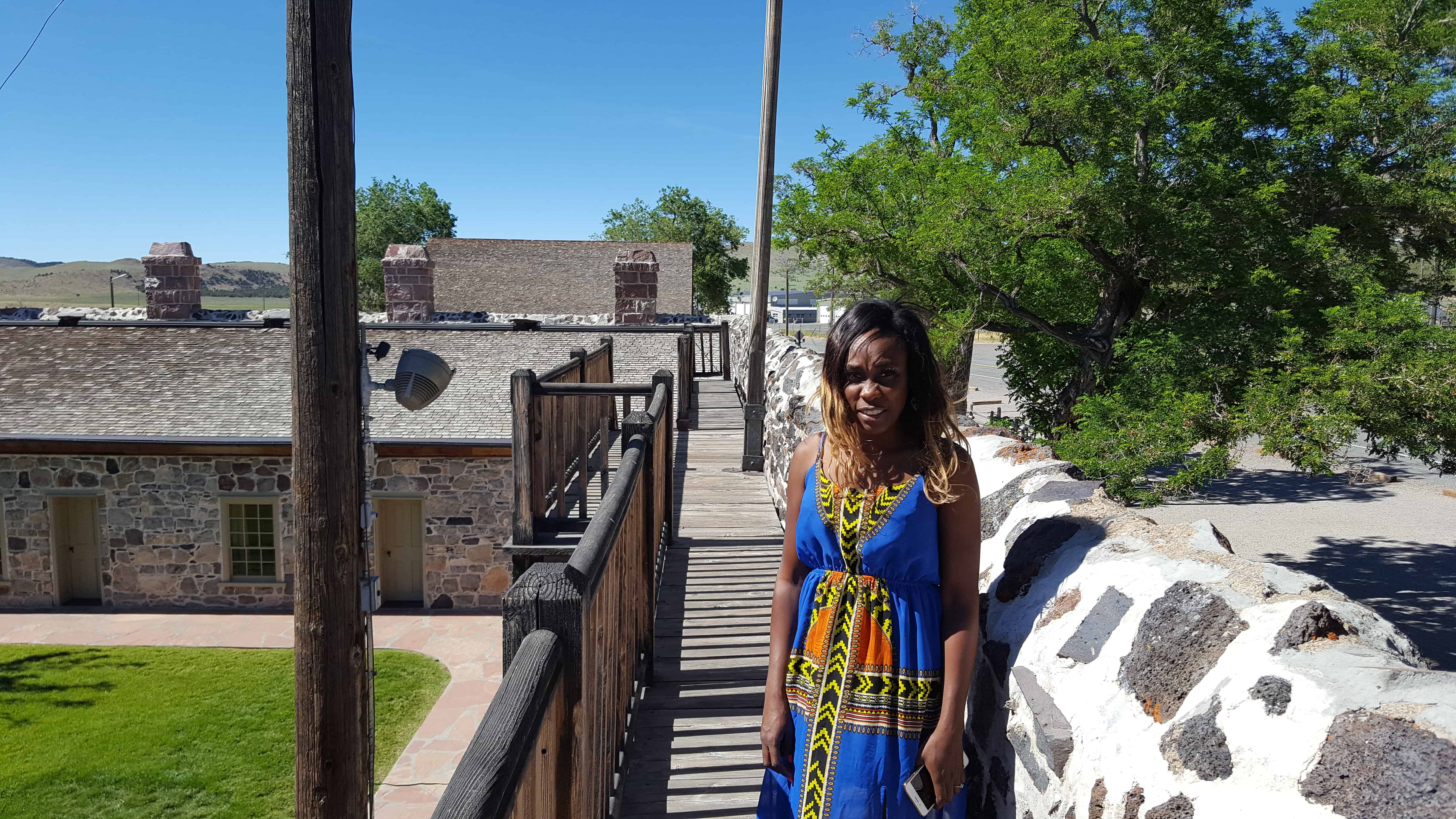


Completed April 12, 1867, by direction of Brigham Young, with L.D.S. Church funds, as a travelers way station and refuge from Indians. Ira N. Hinckley built and maintained it as a hostelry and residence until 1877. A well within the fort provided culinary water. Cove Creek supplied irrigation. One of its 12 original room s was used as a telegraph station. Early in 1861 Charles Willden built 3 rooms and a dugout, known as Willden’s Fort. This was a convenient campsite for President Young and other travelers.

Pingback: SLC to SoCal – Cove Fort | JacobBarlow.com
Pingback: Fort Willden | JacobBarlow.com
Pingback: Cove Fort | JacobBarlow.com
Pingback: Ghost Towns in Utah | JacobBarlow.com
Pingback: Sulphurdale, Utah | JacobBarlow.com